Ford Puma vs Honda HR-V
Official fuel use, running costs and specs, side by side.


Side by side
Specs are for each car's newest version. The better figure is in green.
A typical year's fuel
- New Zealand
- $1,714
- $1,682 (better)
- Australia
- $1,422
- $1,395 (better)
- United Kingdom
- £1,041
- £1,022 (better)
- United States
- $1,324
- $1,299 (better)
Official figures
- Uses
- 5.3 L/100km
- 5.2 L/100km (better)
- On a full tank
- 792 km
- 962 km (better)
Space
- Seats
- 5
- 5
- Boot
- 456 L (better)
- 437 L
- Length
- 4,186 mm
- 4,343 mm
- Weight
- 1,280 kg
- 1,320 kg
Engine
- Engine
- 1.0 L 3-cylinder turbo petrol mild hybrid
- 1.8 L 4-cylinder petrol
- Power
- 92 kW
- 105 kW (better)
- Torque
- 170 Nm
- 172 Nm (better)
- Gearbox
- 6-speed manual
- CVT
- Drive
- FWD
- FWD
Safety
- ANCAP
- ★★★★★ (better)
- ★★★★☆
- Euro NCAP
- ★★★★★
- –
A typical year: New Zealand 11,000 km (Ministry of Transport's average for a light vehicle); Australia 11,100 km (ABS Survey of Motor Vehicle Use average); United Kingdom 11,265 km (DfT National Travel Survey average of about 7,000 miles); United States 21,726 km (FHWA average of about 13,500 miles). Real costs depend on how and where you drive. Work out a particular trip.
Puma or HR-V?
Which uses less fuel, the Ford Puma or the Honda HR-V?
The Honda HR-V, at 5.2 L/100km (54 mpg UK, 45 mpg US) to the Ford Puma's 5.3 L/100km (53 mpg UK, 44 mpg US), by their latest official figures.
Which has the bigger boot, the Ford Puma or the Honda HR-V?
The Ford Puma, at 456 L to the Honda HR-V's 437 L, for their newest versions.
Each on its own

Other comparisons
What will the drive cost?
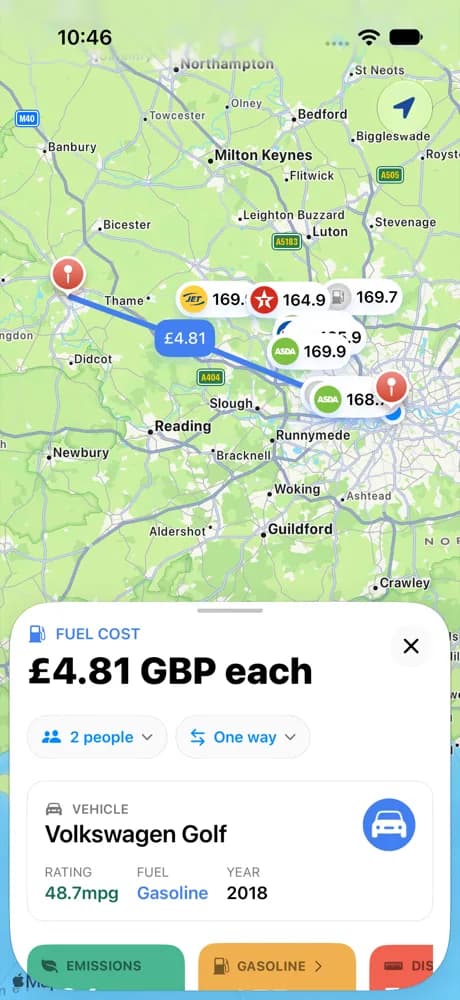
Roadtrip works out the fuel or charging cost of any drive for your exact car, finds the cheapest stations on the way, and splits it between everyone in the car.


Rated 4.7 by drivers · 700,000 downloads